Showing posts with label work. Show all posts

Monday, April 5, 2010

linda linklink

How to be Reborn at Work


I had several requests after the Easter themed article article How to die at work for a more positive follow-up on how to be fully alive and human in the workplace. So with some concern that people may view me as the wrong kind of crazy...here it is:

How to be Reborn at Work

Many people complain about their work and colleagues and some even say they don't feel "fully alive" at work. Whining is in fact something of a national sport here in the UK and in many other countries I've worked in. Clients sometimes tell me everything would be OK if they had a new boss, got promoted...or whatever. What focusing on external things that can not be changed easily does is dis-empower people, which has the nice pay-off that no action is needed and righteousness is assured. Rather than focus on bitching, moaning and complaining however here are a few areas that anyone can work on to feel like a human being again in the workplace.

Get Healthy
This is the part where I tell you what you already know and have to give my mum 10% of all royalties. If you look after yourself - and start with the basics - sleep, exercise, diet, drug intake - you will feel and work a lot better (fact) and may start enjoying your job more (probable). Health is your foundation and you can't cheat the biological system - prioritise it.

Get Real
Many people split off a part of themselves at work and put on a face to get by in a job they hate. Used sparingly this can have a positive side (professionalism) but as a daily tactic is psychologically unhealthy, undermines your own values and leads to an inauthentic soul destroying workplace. Try getting real at work - by this I don't mean be rude - "be yourself...but carefully" was the best pre-date advice I ever had and applies here too. By getting real you can start to ask for what you want and make positive changes rather than building quiet resentment.

Get Creative
Creativity is increasingly part of the modern workplace. While "we are all artists now" may be overstating it I believe that creativity as the hardest thing to outsource is not only essential for feeling fully alive but is a critical employment skill. How else could you do what you are doing? What other possibilities exist? Go on, live a little, be creative.

Get it Together
Managing stress and getting yourself together under pressure by centring at work is a great way to cope with the madness and feel human again.

Get Together
Reach out to other people at work and really communicate with them. Really ask and answer "how are you?" Being human is a communal process and you can't go it alone, so why not build real relationships at work? I will also use this opportunity to plug the communication and team building training I provide which helps with this aspect tremendously.
.................

So What: There is a lot you can do starting today to feel more alive at work.

Read More

Wednesday, March 24, 2010

linda linklink

Spirituality and Stress


The stress management training I provide often incorporate work with gratitude, meditation, discussion of meaning, a model based on the serenity prayer, and other work that could be considered "spiritual." I do this because it is what works, so was was glad to find this is an article on spirituality and stress.

"As a cancer and hospice physician, I care for people at the end of their lives. The average survival time for patients we see in our hospital is about 22 days. Daily I see the importance of spirituality as individuals reach out for consolation and strength from outside of themselves. The name that they use for this higher power may be different. It may be God, Prophet, Lord or Allah — or it may be an unnamed force.

I've come to believe that the need for spirituality — belief in a higher power — must be inherent in humans, much like the need for water and oxygen. We may have different belief systems, but at the end of the day we all reach for something over and above ourselves. As many of you have commented, taking care of ourselves includes nurturing our spirituality."

Read More

Friday, March 5, 2010

linda linklink

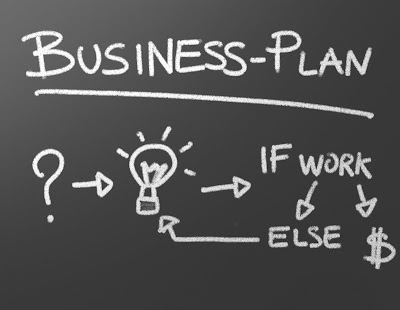
100 Year Business Plan


In 100 years I will be dead and so will you. What will be left behind of the work you did this week? What about your life's work?

I've been thinking about this since I heard of several Japanese companies having 250 year business plans. 250 years is a bit much for me so I've just gone for a 100 year medium-term one. I am fully aware that "no plan survives the battlefield" and think it's vital to have one none the less.

This type of long-term thinking may seem shocking from a "quick-fix" Western point of view and utterly pointless from an ego-centric "what do I care, I'll be dead" mentality. Short-term unsustainable thinking has been at the root of many of the world's problems from the global economic downturn to environmental degradation. Note that "time-frames of consideration" usually increase developmentally(though this doesn't mean people are not present in the moment) so this type of thinking shows a certain maturity.

In balance to my last post suggesting the lens of "would I still so this if I had a year to live?" can be useful, I would also suggest that asking "How does this fit into my 100 year business plan" is another good one. Is your work sustainable? Is it making a difference? If not, why bother?
Read More

Monday, March 1, 2010

linda linklink

Why E-Learning Doesn't Work


Training Zone has published an article of mine on Why E Learning Doesn't Work that is proving popular..well, controversial at least :-) Here it is in full:

..............................

E-learning is increasingly popular but there’s a problem: it’s not really learning and it doesn’t really work. What! How can I say that? It’s all modern and uses computers and everything! I’m being somewhat flippant but here’s my point – e-learning is good at certain things and rubbish at others. This article explains why.

First, I should explain my own perspective as I’m not an impartial observer. I’m a specialist in experiential, interactive and “embodied training”. I use this approach both because it fits my values and because I’ve found that it’s what’s most effective. I would be equally happy writing an article called “why traditional classroom learning is a total waste of time” too. I am also no technophobe enjoying Twitter, blogging and my I-Phone.

What is Learning?

The majority of people in the Western world now have the close to the sum total of human knowledge at their fingertips via the internet, To be more precise they have information, and e-learning is a part of this boom (as is this article). Information isn’t however wisdom as almost any viral internet phenomena will prove! Like the web, e-learning is great for learning about things. Like most people I use Google and Wikipedia to find about things and e-learning makes this more efficient collecting relevant data in one place, but this is not to learn to do things. Think about driving – yes, the theory test is useful, but there is no substitute for lessons. HUman Learning any skill whether it be driving, speaking French or leadership skills, takes real-world practice and bespoke human support. E-learning often misses these two critical points. To be fair, not always, and the use of video, customer support and real-time “synchronous” e-learning is growing and generally viewed as making e-learning more effective (more a driving simulator to continue the analogy). Note however that this is making e-learning more effective by making it more like traditional training!

The Human Touch

Being able to see delegates, resonant with them emotionally, pick up on subtle nuances of communication and respond appropriately is the very essence education. I believe passionately that training and coaching are not about getting a “thing” from one head to another, but are an intimate dance that transforms both parties. We are not computers and if we treat people as such they will rightly resist and rebel.

I highly recommend the new film Up in The Air staring George Clooney. In it a company that makes people redundant tries to switch from face-to-face firing to video conferencing. The film explores the issue of removing this vital “human” touch. I use this fictitious example to protect the guilty in the real world. I would regard some e-learning “solutions” I have seen applied to human issues (and this definitely includes stress management and leadership training) as not only ineffective but dehumanising and ethically dubious.

Retention of Knowledge

Tell me by e-mail I forget. Show me I may remember. Involve all of me (and not just by clicking through a few games) and I really learn.

Second Order Learning

A whole level of learning that Wikipedia doesn’t touch is when the learner themselves changes. This “second order” or “ontological” learning is what is required for lasting behavioral change and therefore impact on bottom-line results. Let’s take stress and time management training which I provide regularly. I’ve seen bad e-learning programs which are just like Power Bore slide telling people about stress and time management. This in no way helps with people’s actual stress or time management. More advanced interactive e-learning programs may encourage people set goals and establish practices like regular deep breathing or list-making to support behavioral change in these areas. This is a bit better. I have never yet however seen an e-learning program which works effectively at the level at being. What do I mean by this? For example - does a person have a set of beliefs about workload that mean they will always be overwhelmed? Is there an embodied tendency to say yes? What is a person’s unique emotional pay-off for consistently being overwhelmed? Unless this level of highly individual learning is accessed “tricks and tips/ tick-box e-learning won’t be effective, and any money spent will be wasted.*

This applies to other areas too, from leadership which I hope is very obviously not learnt from an I-Pad, to health and safety. Can a person really safely learn manual handling without being given feedback targeted to their specific body and tasks? Traditional class-room learning (which itself can be non-interactive and “cookie cutter” in its approach) often fails to shift lasting habits – how much more so a few slides which may or may not even be read?

But What About...

What about all the advantages of e-learning? It’s cheap right? Yes, so is the clock I bought from Poundland that doesn’t work either. If not effective at producing behavioral change (and therefore better results) e-learning is hardly good value. Likewise, it can be standardized but this is not usually a good thing for learners and therefore outcomes.

Much of what I have said is also not fair to all e-learning providers so feel free to “yeah but...” this articles and advertise quality wares that address the issues I raise. My sense is that e-learning is definitely improving (there are some great companies here in Brighton alone - hello Brightwave, Kineo and Epic!). I also don’t think that the e-learning train is likely to stop, I do however hope it picks up the essence of what learning is all about along the way.

The Future

Perhaps blended learning solutions are the future - bringing together the best of e-learning and traditional training? Getting some factual learning across electronically before an interactive course and having good e-follow-up for example can make better use of “contact” time. I also think e-learning is a good challenge to stagnant traditional trainers as now they have to offer something that Wikipedia cannot. A concern I have is that increasing demand for e-learning will replace subject matter experts who know their material and how to work with people deeply, with tech wizards and companies large enough to afford the outlay of e-learning design. Time will tell, and ultimately what works will prosper.

I hope this article I’ve clarified some of the less obvious weaknesses of e-learning to balance its apparent strengths .


* See also Kirkpatrick’s work on learning evaluation theory.

........................

Mark Walsh is a UK pioneer of embodied training. Based in Brighton, Sussex, he heads Integration Training - business training providers specialising in management and leadership training, team building, stress management and time management training. Contact Mark on 07762 541 855 or visit his training blog.

Summary Points

  • · E-Learning has gotten popular but may not be good for certain things
  • · Learning about is not the same as learning to do or be
  • · The human touch is essential
  • · Cheap isn’t the same as good value
  • · Not all e-learning is equal
  • · Blended solutions may be the future

Read More

Tuesday, January 12, 2010

linda linklink

Being a Woman at Work


A good blog post about reclaiming feminine values and being a woman at work. Fellow student of Richard Strozzi Heckler Susan Harrow:

"Women often believe that they must act like men to succeed. They scramble up the corporate ladder by copying traditional male behavior. Although it sometimes buys them temporary "success", most of the time, on a deeper level, it doesn't work. They frequently find themselves dissatisfied, restless, and ultimately unfulfilled." CONT
Read More

Friday, January 1, 2010

linda linklink

New Year's Resolutions That Work


Guest blogger and London coach Natalie Korris write about New Year's resolutions that work. See also this article on how to change.

...........

New Year Resolutions that Work

It’s this time of the year when a lot of people take time out to reflect on what they’ve achieved and commit to projects or lifestyle changes for the new coming year.

According to previous surveys, many will have broken their resolutions by the end of January.

As a life coach, I recommend to my clients not to wait for the beginning of the year to make resolutions but to decide to live a happy and fulfilling life every month, every day and every minute of the year.

If you have decided to make a New Year resolution, here are my

10 Steps to Keep your New Year Resolutions:

1 - Start something that you know YOU want to do.

2 - Concentrate on one thing for now.

3 - Treat your resolution as a goal and make it SMART:

Make it Specific: Describe what would you like to achieve in detail and be specific. How much weight do you want to lose? Why do you want to achieve this? What it will give you?

Make it Measurable: Imagine you have achieved your resolution. What difference will that make to your life? How will you know you have achieved it?

Make it Achievable: How far is achieving this goal under your control? Do you have enough time to achieve it?

Make it Realistic: Do you have the skills and resources to achieve your goal?

Make it Time-framed: When do you want to have achieved your goal by?

4 - Visualize the end result.

Write down what you want to achieve, make a vision board of it and place it where you can see it every day. This is classic law of attraction theory. Imagine what it will feel like when you have achieved it.

5 - Write down the steps.

What do you need to do in order to achieve your goal? List all your options and tasks and set yourself deadlines. What are you going to commit to do in the next few weeks?

6 - Tell the important people in your life about your New Year resolution.

This will make it more real.

7 - Keep track of your progress.

If you see that you are progressing, it will encourage you to continue.

8 - Be positive and forgiving.

If things are difficult and you have setbacks, be positive towards yourself. Ask yourself this: if you beat yourself up, will that help you to achieve your goals? Be kind to yourself. It’s OK to have a bad day.

9 - Reward yourself.

10 - Enjoy the process!


Read More
Fashion,Fashion Style Ttrends, hair Style, Fashion Style, Fashion Style Fashion,Fashion Style Ttrends, hair Style, Fashion Style, Fashion Style 2015