Showing posts with label business. Show all posts

Tuesday, March 16, 2010

linda linklink

Charge as Much as You Can


Charge as much as you can and pay as little as you can. This is my philosophy and business practice.

Now, reading this you will likely have just had one of three responses. If you are like many regular business folks you will read this and say "of course, that's what business is all about." If however you are a non-psychopathic human being you will be disgusted and be saying "what about XY and Z!". If you are a regular reader or anyone who knows me at all you will likely be thinking I have gone insane, sold-out my principles or am about to make a clever turn luring readers into a cunning game of mental naked Twister as is my habit :-) The later is true - here's why:

The rub here is the word "pay." If all you value is money in the short term it "pays" to screw everyone over as much as people. Charge as much as you can possibly get away with and pay suppliers as little money as possible. The best form for this is slavery and violent domination, the second best is many modern corporations and businesses involved in "unfair trade", sweatshops, environmental degradation, and general nastiness :-(

The next step up from this is to build a business that looks for more sustainable profits by thinking longer term and building more mutually beneficial relationships. Happily many people who have been in business a while operate this way, simply because it is good for profits in the long-run. In this way I may want to charge as much as I can without pissing my clients off and pay as little as I can to my suppliers to keep them happy. Relationship is taken into account and the world is a slightly better place than the dog-eat-dog mindset of before.

Note that this development is both moral and intellectual, and also more profitable. If you are thinking "yes, but nice guys finish last", I'd agree (though "nice people" may judge the race by different criteria which means in their eyes they still win). Being "nice" is not true moral developmeent but just violence with cherries on top. Truely compasionate powerful people finish first.

The third stage of development in business is where "multiple bottom-lines" are taken into account. This means that people considering what is being "paid" in wider terms than just money. Other things such as human and environmental factors become important in their own right (what it means to "win") and not just as means to profit or as a marketing exercise. By considering my core values when I pay as little as I can and charge as much as I can I work in a way that is in-line with my deepest self and the kind of world I'd like to help create. It also not only still get the job done but gets it done better than just looking at £££. This is the future of business. Come join us, we're having WAY more fun :-)
Read More

Friday, March 5, 2010

linda linklink

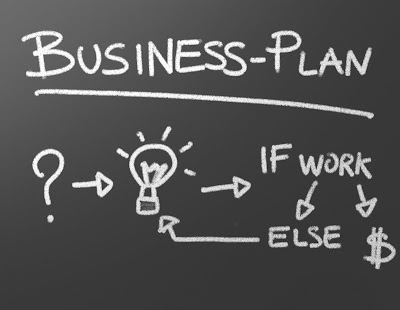
100 Year Business Plan


In 100 years I will be dead and so will you. What will be left behind of the work you did this week? What about your life's work?

I've been thinking about this since I heard of several Japanese companies having 250 year business plans. 250 years is a bit much for me so I've just gone for a 100 year medium-term one. I am fully aware that "no plan survives the battlefield" and think it's vital to have one none the less.

This type of long-term thinking may seem shocking from a "quick-fix" Western point of view and utterly pointless from an ego-centric "what do I care, I'll be dead" mentality. Short-term unsustainable thinking has been at the root of many of the world's problems from the global economic downturn to environmental degradation. Note that "time-frames of consideration" usually increase developmentally(though this doesn't mean people are not present in the moment) so this type of thinking shows a certain maturity.

In balance to my last post suggesting the lens of "would I still so this if I had a year to live?" can be useful, I would also suggest that asking "How does this fit into my 100 year business plan" is another good one. Is your work sustainable? Is it making a difference? If not, why bother?
Read More

Friday, February 26, 2010

linda linklink

Help for Parents from Business Training


How can business help parents? Simple - we'll sell your children. Only joking.

I lead business training courses and in these participants who are also parents often say, "Wow, that's great, I can use that with my kids" or similar. The joke has become they get a free "help for parents from business" workshop as well as the business training course. With this in mind and my impending uncledom :-) I have decided to write an article on this area explicitly rather than just helping parents by mistake. Please note, I am not a parent but have worked with children on five continents since I was one in various fields, so know a bit, but not a lot about children. I am including what parents on my training courses have told me is most useful.

Stress Management Training
Children are really stressful (as well as wonderful). Mindfulness, embodied techniques, good social support and cognitive reframing are all very useful for parents. Here are my top stress management resources and tips. I am particularly interested in resilience training currently and being a parent seems all about this! The research shows that talking about feelings, social support, good physical health and the meaning people make of events are all important for resilience.

Time Management Training
One reason I am in awe of anyone who raises children is that I wonder how they get anything done as kids are so demanding??!!!? With that in mind here are my top time management tips. Being able to say no and ask for help are critical as is understanding when you have made a commitment, and when children wreck your plans - how to renegotiate commitments in a way which looks after relationships and dignity.

Communication Training
Communicating with children and teenagers (retch) can be demanding. Good emotional intelligence skills are essential - listening often being the one that training course participants find the most useful, and I have noticed working with children that those that seem healthiest have parents who can listen well and encourage them to both express and manage their emotions. Looking for underlying needs, separating observations from evaluations and making clear requests are also all very helpful communication skills. Here are my top communication tips.

Leadership Training
Being a parent is being a leader. After about two years age children have to be lead and the core leadership skills for business people are the same for parents. I work with "embodied" approaches to leadership in particular which are particularly good with young people who pay more attention to what you do and communicate non-verbally than what you say. Here are some further details on leadership training (and a video). Note that good leadership is authentic (children have great BS detectors), and leading by threats and coercion will only get you so far (sooner or later you will get either rebellion or resentment). And as a final thought I would remember that all good leadership is servant leadership.

I hope these have helped - it is not my intention to tell anyone how to parent, only to offer what I have learnt form the business training world. Feedback welcome.

Read More

Tuesday, January 26, 2010

linda linklink

Green Research for Business


Verdantix are one of the top research firms looking at Green issues and their impact on business. Their website is a good example of the type of togetherness and languaging need for the green movement to work with mainstream business.


Read More
linda linklink

Networking Tips and No Nos

Networking Tips and No Nos

If you're in business you're meant to network, it's in THE RULES or something. Most networking business people do however is a complete waste of time however, and an unpleasant inauthentic crass one at that. Here are my list of networking tips and no nos. Things to avoid:

Being a Selfish Git (a.k.a. a "Netjerk")
Networking IS about getting in touch with certain specific people - your target market and people who may know your target market (in my case training managers in medium to large sized companies in the UK for example). AND while targeting is key, don't just be a blinkered selfish user git. It's networking not getworking or netjerking.

It may be the wife, friend or son of an apparently "useless" person that connects you to a buyer for example. You are also building your public identity with each person you speak with. Note also that effective networking is about giving and being useful to others. The person that is now providing me with web design gave several good pieces of free advice and contacts for other work before we started working together - people reciprocate and cross refer naturally once relationship is built.

Being Boring
Me, me, me is boring, boring, boring. Remember that people's time is precious, listen and get to know people. This is in your interest as well as their as any good sales person will tell you.

Shoulder Gazer
Give people your full attention or none at all, looking over someones shoulder to see if anyone more "useful" around at a networking event is offensive.

Card Thrusting
When you meet someone do not just trust your card towards them straight away - this is definite no no. The card handover should be like a respectful kiss at the end of a first date. You don't even have to exchange cards with everyone you meet.

Being a Networking Fake
Be yourself, you're better that way and most people can smell BS a mile off anyway. If someone asks how business is and it's not great, say "not great". If someone asks how you are answer them truthfully, you will be building trust.

Card Collecting
While networking for me is not about just talking to people I can sell to, it is also worth following-up connections, and getting put in touch with people you can sell to (or buy from). Add people to your database, LinkedIn, Twitter or whatever else the kids use these days, after you meet them. Mail that day or make a note to phone people to continue building relationship and being generous. Just collecting a bunch of cards won't achieve anything.

Being a Networking Tart
Find one or two groups and get to know people within them by building relationships over time.
Groups I enjoy networking with for example are the Brighton and Hove Chamber of Commerce who are friendly and funky and the local CIPD group (I work in business training so these are my peers and potential customers).

Networking Tips and No Nos Conclusion
I hope you've found these networking tips and no nos useful. Good networking is just being yourself and getting to know people, who you may be of service to, and who may enjoy helping you out. Look for the win-wins and enjoy being yourself.

Read More

Wednesday, January 20, 2010

linda linklink

S**t! I'm a Manager!


A classic problem in business is when people with technical skills are promoted to managerial positions which they are not equipped for. A great engineer, chemist or lawyer may say to themselves, "S**t!" when promoted to a new manager and it becomes apparent that a very different skill-set is now needed. This article is for people in that position or HR personnel who wish to support new managers.

- Acknowledge the Need
In order to develop the necessary skills managers must first recognise the "skill gap" and acknowledge that something needs to be done about it. The mind-set that managers bring to this is crucial "S**t, I'm a manager!" is quite different from "I've learnt before, I'll learn again" for example.

- Training
Once a skill-gap has been identified the relevant training should be provided (often soft skills). Ideally this will be provided before a move into a leadership position but realistically it may happen after. If a manager is aware of a need but not getting support they may need to insist (it is an obligation for employers to suitably train anyone for a role) or go outside and get the training themselves.

- Mentoring
Mentoring is a great way for new managers to learn "on the job". Often people respect and relate to those who have made an equivalent journey themselves.

- Practice
New skills take time to acquire and improved people skills are no different. A new manager will need to be committed and practice whatever they learn (just reading a Daniel Goleman book won't cut it).

- Evaluation
After a suitable period of training, mentoring and adaptation an evaluation needs to be made as to if the new manager is suited to a leadership role. Some may be happier in a technical role - having a company structure that allows financial progression without managerial responsibilities can be beneficial.

Further information on business leadership and management training (no obscenities)

...........

Managerial So What: If promoted from a technical to a managerial position new skills are needed and can be learnt.

Read More

Wednesday, January 13, 2010

linda linklink

The Future Of Training


What is the future of training? What will the next ten years bring? What will grow and what will die? Who knows! But here are my wild guesses. Given that I run a training business I should also point out that I'm totally biased:

The "Return of the Human" Collides with "More from Less"
Cultures in business are slowly shifting to become more people-focused and the end of the recession will likely speed this. Employers are realising that people are not machines, need to work sustainably, have emotions, families and even spiritual beliefs. This trend will however collide with the idea of "more from less" - which has been getting people to work longer and longer hours. "The end of more" is a trend that applies to both consumerism and the future workplace. Ultimately the "return of the human" trend will win out as it is more competitive long term (e.g. reduce sickness and burnout) - we are seeing this with leading edge companies such as Google, Semco and Innocent today. Long may it continue.

The Growth and Decline of PC Training

Businesses and other organisations have been getting more tuned in to diversity, equality and how language can be oppressive over the last twenty years. This is a good thing - Stewart Lee says why better than I can - that has transformed working environments. Training companies have made a lot of money teaching people why "person with disabilities" is a better thing to say than "disabled person" for example, and this will continue...for a time. There has also been a backlash against what is perceived as political correctness and I believe diversity and equality training will decline, both because of this backlash and because eventually I hope, we will reach a point where such training is no longer necessary, as it will be a given.

Interestingly, there are now many trainers out there doing what I would call "post-PC" diversity and equality training which accepts that phraseology constantly changes and can be a mouthful, and moves beyond a "blaming and shaming". Hurrah!

The Growth of CSR and Environmental Training
The growing power of business means that it will be demanded that business have social responsibility in the future. This change will also come from the inside as those involved in business evolve personally. This one is a hope as well as a prediction, because if business doesn't do this we are doomed (yes, doomed). In part this will be about post recession business checking its values and from a younger generation which has motivations beyond profit. London Business School for example now run courses in CSR, socially responsible investment and social enterprise because of demand from younger students. Crucially such changes are also profitable so the old-guard will be left behind. The times they are a changing.

The Growth of Integral Training
Training that includes more of the delegates will prosper. "Head-led" Power Point borefests will not be as successful as interactive, emotionally informed embodied training. Training that takes into account all of Wilber's quadrants (subjective and objective,plural and singular) lines (multiple intelligences), levels (developmental stages), types (e.g. MBTI) and states of consciousness will grow. Training that is integral is more effective and gets better results as it takes into account more of the factors that are involved.

E-Learning Learns its Place
E-Learning has become popular and will continue to do so because it is cheap and versatile. It also not really learning. Wow, hang-on cowgirl, what did I just say? 9 times out of 10 E-learning is learning "about" things. It rarely teaches how to do things and I've never seen it teach about the person doing the things. This last level (called second order or "ontological" learning) is what really makes the difference. Wikipedia is a good way to learn about things, training needs to provide a better service in the future.

I don't mean to be too hard on e-learning - there are some great providers locally like Epic and Brightwave - and it has it's place. The place of e-learning is in support of bespoke human-led training -machines can not teach like people. I therefore predicted that blended learning will grow and the one-size-fits-all-people are just-machines form of e-learning will decline.

The Growth and Decline of Measuring Training Results
Those responsible for training in organisation and outside providers will be under increasing pressure to "prove it". Application over theory will triumph and training results will increasingly be demanded and measured. As the downside of reductionism and excluding tricky human unmeasurables becomes clear, people may becoming dissatisfied with Key Performance Indicators and we may eventually see a decline in this trend. One way of looking at this is that training needs to moves from a pre-rational belief based model where it's at currently, through facts and figures to a post-rational human way of doing things.

The Death of The Expert/ Growth of Coaching?
The coaching method will increase as the learning paradigm shifts from expert led to learner led, with an emphasis on practice and application rather than just theory This will mean a growth of not only coaching but of action learning sets, humanistic schooling, etc. Coaching also risks cynical kick-back and decline however due to lack of standards and regulation (If I see one more under qualified life-coach on Twitter...") . This trend will also mean a growth in informal non-classroom learning (facilitated by e-learning used appropriately).

The Growth of Knowledge Management Training
Organisations are realising that much learning happens "off-line" in informal settings. Also that organisations know "more than they know" to steal a phrase. As a trainer I find the classroom as a group will often know more about a subject combined than myself as an "expert" individual (my role then becomes bringing out and managing that knowledge). Perhaps more fundamentally we increasingly live in a "knowledge economy" where the ability to retain and grow knowledge in any organisation is paramount. With these things in mind I predict that training relating to knowledge management will continue to grow.

The Emergence of Slow Training
Over the years there has been an ever increasing pressure to do training in less and less time. I'm told that Ashridge for example in the 1930s had a standard 13 week leadership course (where now five days would be standard), similarly my half-day courses are very popular and bite-size lunch-time learning has become a trend. I think there will be a kick-back against this as people realise that real learning takes time. The "slow" movement will emerge as it has in food, parenting and travel.

The Death of Training Institutions?
I don't think many large training institutions will survive the next ten years - they are too unwieldy for the rapid pace of change. The CIPD may become defunct, many MBAs irrelevant and the large aristocratic British business training residencies may suffer. In many cases I hope not, but this is my prediction.

And last but not least, we will all wear Lycra.
I've seen science fiction so this one is the only one I can say with certainty :-) The rest is just guesswork, what do you think?

.......................


*NB: In posting this there is a risk of a pre-trans fallacy in interpretation, please do not call me an blah-blah-blah-ist or accuse me of an ism without knowing my life.


Read More

Thursday, December 31, 2009

linda linklink

CSR - Benefits to Business

The following article from the ever great Mindtools highlights some of the benefits of corporate social responsibility (CSR).

..........

"Today's societies often ask more from major corporations than simply making a profit and paying taxes. There's a general expectation that companies should do their best to trade fairly, uphold human rights, and protect the environment. And the focus is not just on big corporations: small companies are often asked to support local causes and play their part in community development.

How can a business manage these expectations, but benefit its bottom line as well? A successful Corporate Social Responsibility (CSR) strategy can help."...

Clearly, CSR programs cost money and take some staff attention away from the organization's business. However, a good CSR program can bring you multiple business benefits, including the following:

  • Improving your company's reputation, and its ability to manage reputational risks.

  • Helping to promote your brand and image in an increasingly socially-aware and perceptive market place (this may be particularly important if your clients are public entities).

  • Allowing you to create the right environment for your particular business to succeed.

  • Giving you an effective way to manage the pressures on your organization for charitable giving. CSR allows you to make sure any charitable expenditure is effective and linked to business objectives, and that it can be properly accounted for, measured, and advertised.

  • Improving your staff's motivation and retention rates, or broaden skill sets – for example, where your staff are directly involved in volunteering in the local community, or in other sponsorship activities. "


Read More

Monday, December 21, 2009

linda linklink

Small Business Owners and Stress


Here is the latest the HSE has for small business owners (and SME's in general) on stress:

Key messages

  • Everyone in the organisation has responsibility for tackling Work related stress[1], involving unions, staff representatives and employees is critical to raise awareness and improve employee health & well being.

  • Employers underestimate the extent to which employees are suffering from stress or other forms of mental illness.

  • Most organisations will have some form of stress-related problems, the key is to find out where and what the problems are, and how and why they happen. The Management Standards[2] help you decide how to make changes and is a way measure performance.

  • Recognise Work related stress[3] is a legitimate health and safety issue and can be dealt with like any other health and safety risk.

  • You may play a critical role in specifying task and job requirements and allocating individual job roles, your actions and behaviour could have an impact on the quality of working life of your team.

  • You should play a major role in communication ensuring information goes both ways between senior staff and employees.

CONT

Read More

Friday, December 18, 2009

linda linklink

Shades of Green - Levels of Sustainability in Business

Good article from my friend at the Capacity Evolution Blog about how green isn't green isn't green. They claim that there are six distinct levels of sustainability in business:

.........
"Sustainability” is not always sustainable. Simply, doing and describing what you do as sustainable does not make it so. For organizations (and us, personally!) to be sustainable in what we do, we have to be sustainable in who we are and how we see the world. This gives us our best shot at doing something that is actually going to get or generate sustainable results. In the following series of six posts I will introduce the six levels of engaging in sustainability: Compliance, Conformity, Cooperation, Collaboration, Coherence and Constellation. We use these at Interkannections to help our clients clarify their current goals around sustainability and map out their paths for deepening their practice and impact.

Each level includes and transcends the one before it, adding additional functionality and value. CONT."
Read More

Thursday, December 17, 2009

linda linklink

Top 10 Business Training Challenges


Here's a new E-Zine article on the top 10 business training challenges faced by purchasers and business training suppliers.

This article discusses some of the challenges faced by those purchasing business training and issues confronting business training providers. If business is being done with integrity these are closely related as both purchasers (e.g. CEOs, HR managers or training managers) and training providers want effective training that does the job.

Challenges Faced When Purchasing Business Training

Not Sure What Training Is Needed
In order to determine what training is really needed a company should do a training needs analysis (TNA) so as not to waste their time and money.

Not Enough Time
People in businesses are busy and often do not have much time for training. Training can be thought of as an investment and companies can get the most out of training with focused aims and pre- and post-training support from providers.

Not Enough Money
Training need not be expensive. Using small companies with low overheads helps and government grants like Train to Gain in the UK can help. Again being targeted with aims is useful. E-Learning may be cheaper but often does not do the job and lacks the essential "human touch"...CONT

Read More

Monday, December 14, 2009

linda linklink

Work Life-Balance on the Radio


I was on the radio not long back talking about work-life balance and how it feels to run a business. With Curtis James (left) and Soraya Shaw (right) we discuss stress management, time management, leadership and host of other subjects. Thanks to host host Julie Stanford of The Essential Business Guide and Brighton and Hove Chamber of Commerce for inviting me on.
Read More

Tuesday, December 8, 2009

linda linklink

How to be a Business Bastard

This is an article on how to be an total business bastard and loose money. In a cunning reverse psychology type manner I figure that people generally do the opposite of what they're told so teaching people how to be "Business Bastards" is actually the best way to see growth of the kind of business I would really like...it's also more amusing :-)

Let me stress that all of these will not only result in you being an unpleasant isolated human being but will also mean you lose money. All of these strategies will see short-term gains and long term loss. So here are my:

Top Ten Tips on How to be a Business Bastard!

Deny Your Health and Stress
Being a business bastard begins at home so start by being mean to yourself and denying your own health and well being. Under no circumstances admit to stress or needing stress management - this is weak. Even having a body is weak - it is just a cart for your head - never mind that it is essential for leadership to understand the embodied dimension.

Deny All Emotions!

Emotions are weak, do not let them spoil your day by getting in the way of business. Pretend you don't have emotions and punish those who show them as irrational (they are probably women too)! Never mind that research shows that EQ is several times more important to a manager's success than IQ.

Deny Spirituality
There's no place for spirituality at work! Squash the human spirit and get the job done! Never mind that work is a source of life meaning for large numbers of people, that studies show that what really motivates people isn't money nine times out of ten, or that personal development and leadership go hand-in-hand.

Treat People as "Resources", Superiors and Competitors
If you don't want to see other people as people so you can treat them like a total business bastard, it's best to give them dehumanising labels. Seeing people as disposable "resources" as part of a power hierarchy (inferiors and superiors) or as competitors out to get what you need are particularly good strategies.

Only Accept As Real What Can Be Measured
In order to reduce human beings to cogs in the machine it is necessary to accept as real only that which can be measured. Reduce people to statistics and never mind that much of what makes a business really work are the messy intangibles human factors.

Split Your Home-Self from Your Work-Self
It's professional to be one way at work and another at home. Split your personality down the middle - back-stab, sell cyanide as baby food and act like a soul-less git all day long - then go home and play with your children and kiss your partner. Never mind that you if spend all day practicing to be one way you will get good at that (practice makes permanent).

Deny CSR!
There is only one bottom-line and people and planet are none of your business! Business has no corporate social responsibilities! Never mind the business and PR benefits of having a good CSR policy.

Deny Environmental Issues!
It's not the job of business to look after the environment. Never mind that recent studies show that the most environmentally aware companies are also the most profitable long-term. Never mind that there can be huge cost reductions in environmental measures (e.g. energy efficiency) or that the environmental concerns have forced profitable innovation on stagnant industries.

Advertise and Persuade
People need to be brainwashed and manipulated into buying crap they don't need. Never mind that modern marketing increasingly shows that this approach increasingly doesn't work with savvy (some might say cynical) modern consumers.

Think Short-Term
This is the crux of things really. Top business bastards don't let large long term gains get in the way of smaller short-term profits. Go for the quick-win every time.

...........

To be clear - I'm not anti-business - I'm a business-man myself. I see business evolving into a beneficial sustainable practice and would like to support this process -this is a light-hearted nudge in that direction - please don't take it too seriously and excuse my French. If you disagree that business can be a force for good that's OK. Most the "New-Agers" I know who hold this view are pretty impotent (see 11 Things That Aren't Spiritual for a balancing article) so I largely ignore them. From the business side ("This is all well and good Mark but in the real world..." being a bastard is just bad business so the best men will win sooner or later :-) For those looking to speed up the evolution of business and lead their organisation with integrity look into the leadership training we provide and get in touch, we rarely swear this much.
Read More

Sunday, November 29, 2009

linda linklink

Integral Business Resources


There's a whole host of videos, documents and other integral business resources on this page from Fred Kofman's company Axialent.
Read More

Saturday, November 28, 2009

linda linklink

Unreasonable Training

Corporate training is a safe, reasonable and logical business where clear learning aims and consideration for delegates is paramount. This is my own and the majority view in the industry I work in.

There are however other ways of learning then undeniably get results in other arenas. Contrast the average corporate Power Point or leadership training seminar with these clips of hard and "unreasonable" training. The first exemplifies the austerely spiritual approach of Japanese martial arts training (I experienced a similar style while living as an student in the UK Aikido HQ). The second video is not for the faint hearted and shows Chinese gymnastics training (Western gymnastics training is almost as severe) and is in my opinion a form of child abuse.

While is is easy to demonise such approaches (particularly the latter, which to be clear, I find despicable) - what can be learned from them? What if executives and business training providers had this level of unreasonable dedication? Have you ever "stayed up nights" thinking of ways to "make your delegates stronger"? What if you had this type of commitment or your learners this level of ego-free surrender? If business people trained with the dedication of Olympic martial arts hopeful how would they perform?

I am not saying these approaches would be appropriate in the business training world - they are unreasonable - I am however saying they make an interesting contrast and underline some weaknesses as well as strengths of business training culture. Business too after all, is mainly "a matter of hard work and concentration."


My training business website is here. Our specialty is working with the body in a gentle non-athletic way around stress, leadership and team building.
Read More

Tuesday, November 24, 2009

linda linklink

Myths of Sustainable Business


The Eight Biggest Myths about Sustainability in Business
By
Vijay Kanal from the excellent Greenbiz.com


In our research, and in engagements with dozens of Fortune 1000 companies, we are sometimes surprised at the reluctance to pursue environmental sustainability initiatives, because of misconceptions about their cost or benefits. But we have also seen how some companies have embraced sustainability whole-heartedly, and are profiting from it. As a way of helping to get every company on the journey to sustainability, here are some of the most common myths we have heard from otherwise successful companies. As surprising as some of these might sound -- like the idea that there is no money to be had from sustainability efforts -- these ideas persist in companies large and small and in any industry.

1. It's a cost and we can't afford it right now
Sustainability should be considered not just because it is the right thing to do, but also because it makes business sense. If an initiative cannot be justified from a strategic, financial, operational, marketing, or employee recruitment/retention perspective, don't do it. But we have found that in almost every corner of an organization there is a fundamental business reason for being more sustainable.As Richard Goode, Director of Sustainability at Alcatel-Lucent told us recently, "In good times, sustainability can be a competitive differentiator, in lean times, it's a defensive strategy, and in really hard times, it can determine your survival." Xerox CEO Ann Mulcahey shares this view saying that being "a good corporate citizen" saved the company from bankruptcy. Refer to Myth #3 to see how companies have made money from their sustainability investments.

2. It requires lots of staff
A related myth is that sustainability efforts require a big centralized staff to drive and support. In fact, we have found the opposite to be true. At most of the leading companies we have researched, the sustainability team staff size ranged between one and four employees, even at companies as large as AT&T. The role of these groups is to work with the various functions across the organization and with senior executives, to develop a strategy, formulate goals, co-ordinate activities and report on progress. Many of the heads of sustainability we spoke with us told us that in the ideal world there wouldn't even be a need for such a group, as sustainability would be integrated into every facet of the company's operations and products. But until business reaches this ideal state, a small, centralized staff will continue to be necessary.

3. There's no money to be made from sustainability
Sustainability offers innovative firms opportunities...CONT
Read More

Monday, November 16, 2009

linda linklink

Mentoring

Training Zone has published this article on mentoring that relates to both aikido and business training. My mentor Paul Linden and I are pictured above.

"People learn from people. People learn particularly well from people who have trodden a path before them. You can learn about something from Wikipedia, but to learn to do something of value you must have a teacher, or even better a mentor. Mentoring is one of the oldest forms of human learning (predating formal teaching and certainly coaching). For millions of years people learnt the essential skills of life from generation to generation by being shown, imitating and receiving feedback.

I first came across mentoring not in the management training world where I earn my living today, but in a much gentler field – that of the Japanese martial arts. I jest of course. The martial arts are an intense pursuit where mentors can be severe. The images of martial arts films are not far from the truth and there is no question that to learn a martial art one must have not only a teacher, but a close, almost familial, relationship with one."...
Read More

Tuesday, November 10, 2009

linda linklink

Sustainable Business

Nice post from the Concious Business blog about what they call CSR 2.0

Read More

Sunday, November 8, 2009

linda linklink

Conscious Capitalism


Here's a report from the conscious capitalism conference earlier this year. Please enjoy capitalism responsibly.

....................

Extract:

The core principles of Conscious Business are:

  1. Purpose: Finding and focusing on the higher purpose of the business.

  2. Stakeholder Orientation: focusing on the health of the overall system, rather than singularly on the return on shareholder investment.

  3. Servant Leadership: through which the management plays a role of steward to the company’s deeper purpose and stakeholders, focusing on fostering a harmony of interests.
Read More

Tuesday, October 27, 2009

linda linklink

Business and Human Rights

Is your company evil? Who are the "bad guys"? Does your business smell of organic free-range CSR goodness? Silly questions of course but you might find the answers here.

"The Business & Human Rights Resource Centre has become the world’s leading independent resource on the subject. Our website is updated hourly with news and reports about companies’ human rights impacts worldwide – positive and negative.

Purpose

• To encourage companies to respect human rights, avoid harm to people, & maximise their positive contribution

• To provide easy, one-stop access to information for companies, non-governmental organizations (NGOs) and others, whether they are experienced or new to the subject

• To facilitate constructive, informed decision-making and public discussion"

Read More
Fashion,Fashion Style Ttrends, hair Style, Fashion Style, Fashion Style Fashion,Fashion Style Ttrends, hair Style, Fashion Style, Fashion Style 2015